The Emperor's New Clothes a personalised book with your child as the hero
The finest cloth in the world, and only one child who can see it
Two sly weavers promise the vain emperor a cloth so fine that foolish people cannot see it. Our hero peeps at their empty looms, watches the grown-ups pretend, and at the grand procession says out loud what everyone else is afraid to say.
Colour palette: royal purple, gold thread and bright parade-day blue
How these pictures were drawn
These pictures were created using the same child’s photo and story scenes. Choose an illustration strength to compare the pictures.
- Picture style
- Illustrated
- Illustration strength
- Medium
- Illustration look
- Luminous drawing
Showing Medium illustrations.
Sample pages
Sample illustrations of this tale. Your book is drawn with your own child as the hero, in this story's colours.
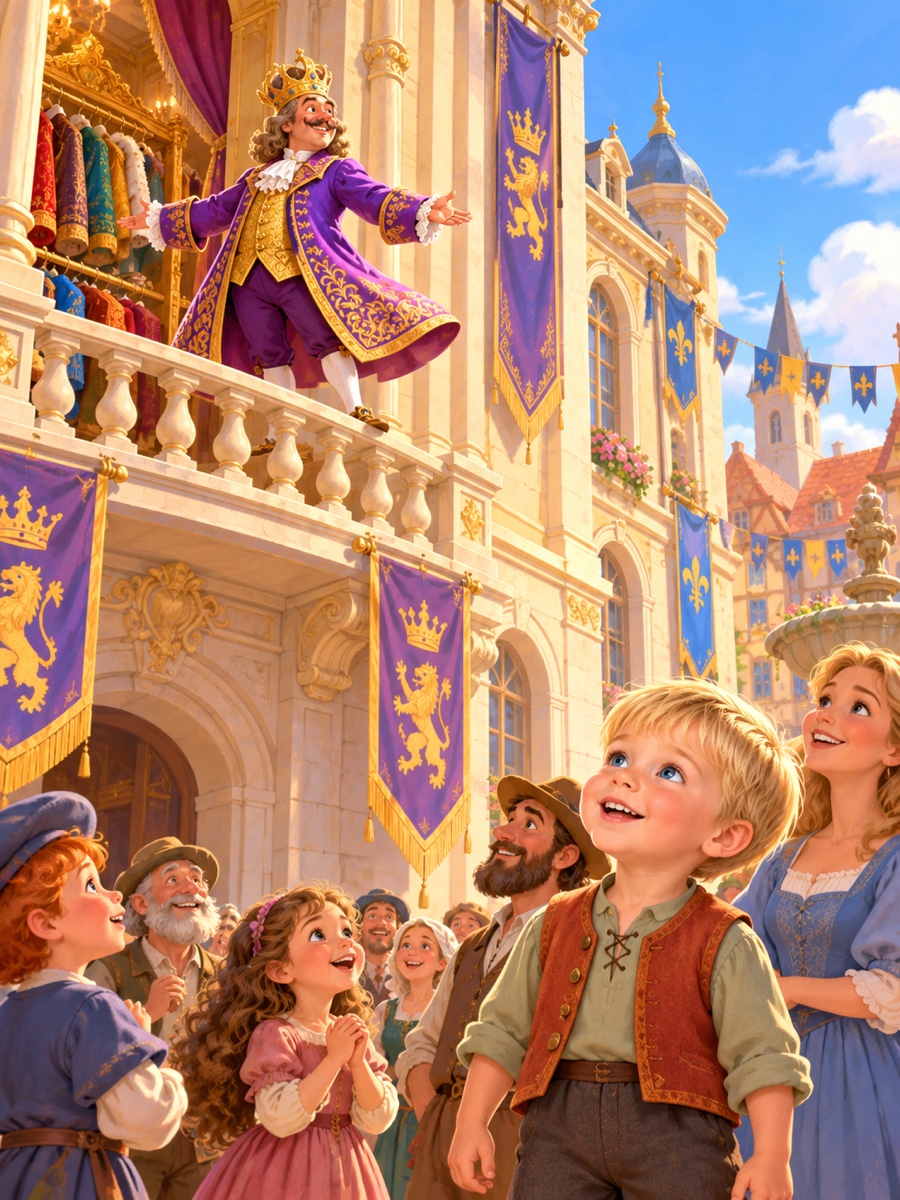
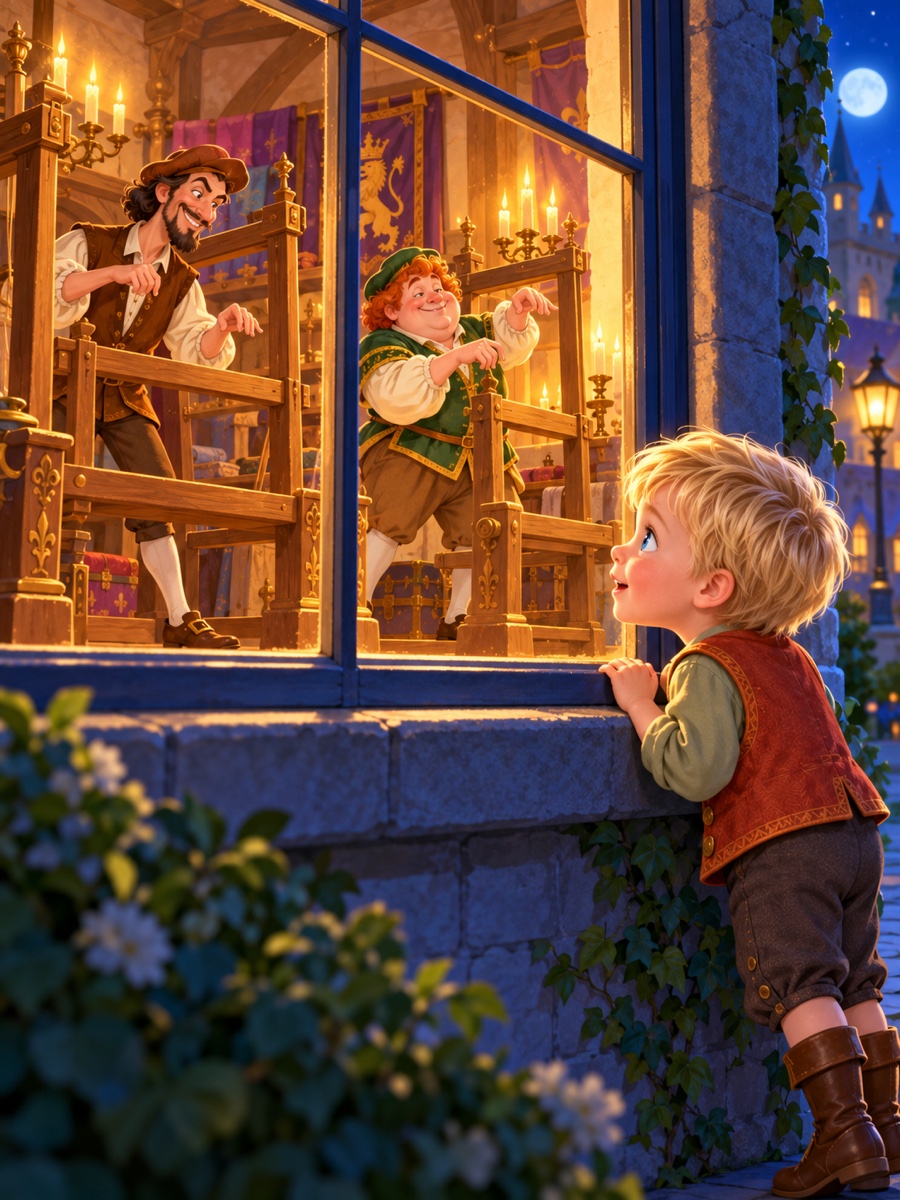
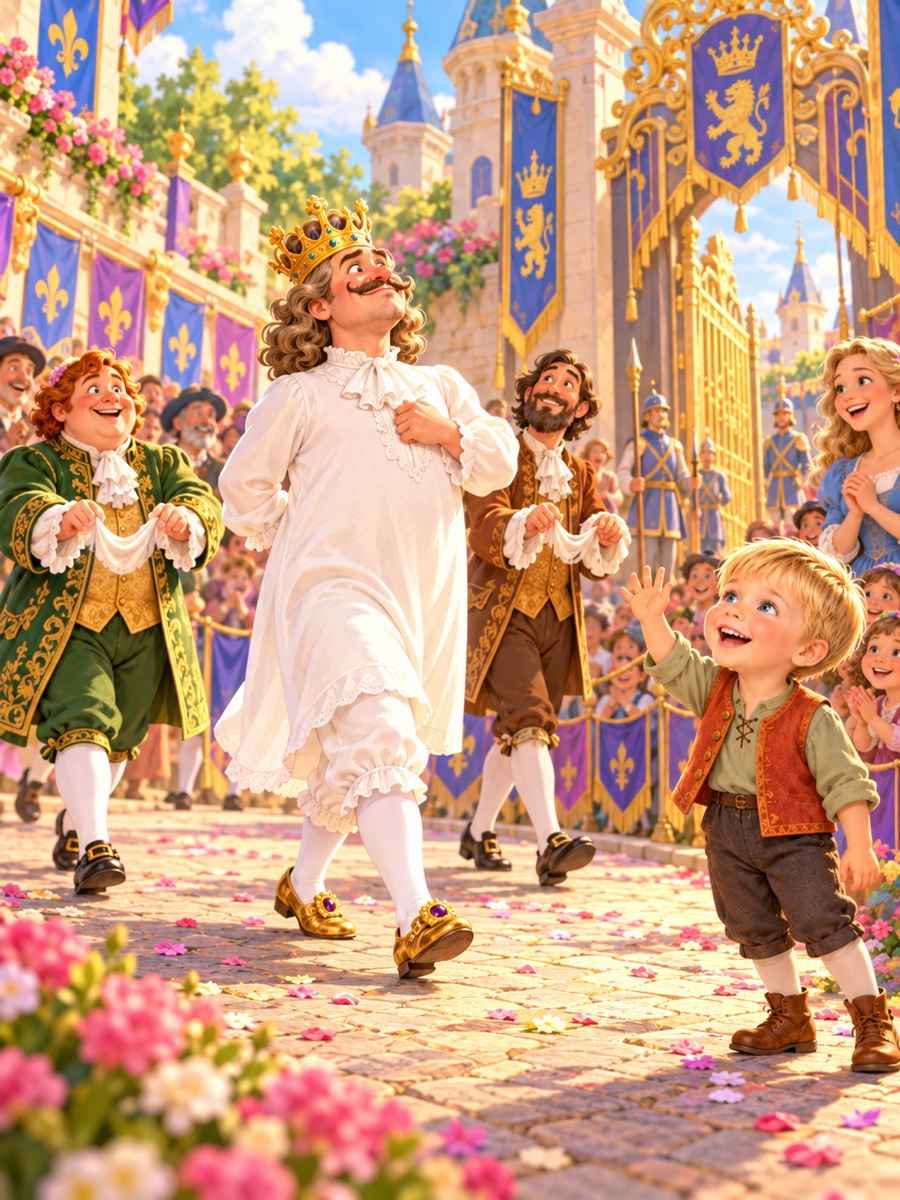
The Emperor's New Clothes: the full story
Many years ago there lived an emperor who loved new clothes more than anything else in the world. He did not care about his soldiers, or the theatre, or riding in the park, unless it gave him a chance to show off a new coat. He had a different coat for every hour of the day, and where people say of other kings, "The king is in his council room," they always said of him, "The emperor is in his wardrobe."
In the square below the palace lived a little child who liked to watch him. Every morning the emperor stepped out onto his balcony in something new, turned this way and that, and the child looked up and counted the buttons.
One day two strangers came to town. They stood on an upturned barrel in the market square and called out, "We are weavers! We weave the finest cloth in the whole world. Its colours are lovelier than a rainbow, and it has a magic all its own: anyone who is very foolish, or not fit for their job, cannot see it at all!"
The people gasped and whispered. The child, standing at the front with a finger on their chin, thought, "Cloth you cannot see? How very strange."
The emperor thought it was a splendid idea. "If I wore clothes like that," he said to himself, "I would know at once which of my ministers are not fit for their jobs, and which people are clever and which are foolish." So he sent the two weavers a great sack of gold, the finest silk and reels of golden thread.
The child happened to be passing the weavers' workshop when the gold arrived, and saw something odd through the open door. The two weavers were stuffing the silk and the golden thread into their own travelling bags as fast as they could.
That night the child could not sleep for wondering. They crept out to the workshop and stood on tiptoe at the window. Inside, by candlelight, the two weavers were working hard at two big looms, moving their hands back and forth, back and forth. But there was nothing on the looms. Not one thread. They were weaving thin air.
"I would like to know how the cloth is getting on," said the emperor after a few days. But he felt a little uneasy, because what if he could not see it? So he sent his honest old minister first. "The minister is clever," he thought, "and nobody is better at the job."
The child was at the window again when the old minister came in. The weavers bowed and pointed at the empty looms. "Look at the pattern! See the colours!" The poor old minister opened his eyes as wide as they would go, and pushed his spectacles up his nose, but he could see nothing at all, because there was nothing to see.
"Goodness," he thought. "Am I foolish? Am I not fit for my job? Nobody must know!" And he said out loud, "Oh, it is charming! Quite delightful! I shall tell the emperor how much I like it."
Outside the window the child clapped a hand over their mouth to keep a giggle in.
Soon another official was sent, and the same thing happened. Then the emperor himself came, with all his courtiers and the old minister. The child peeped round the doorway.
The emperor stared at the empty looms. "What is this?" he thought, and went quite cold. "I can see nothing! Am I foolish? Am I not fit to be emperor?" But all he said was, "Oh, it is magnificent!" The minister pointed proudly at nothing. The courtiers nodded and clapped. "Magnificent! Wonderful! Splendid!" they cried, and none of them could see a thing either.
"There is nothing there," whispered the child to nobody at all.
Everyone agreed that the emperor must wear his new clothes for the great procession. The night before, the weavers sat up with sixteen candles burning. They snipped the air with big scissors and sewed with needles that had no thread, and the child, yawning at the window, watched them do it.
In the morning the weavers held up their empty hands in front of the tall mirror. "Here are the trousers! Here is the coat! Here is the cloak! It is as light as a spider's web; you will hardly feel it." The emperor took off his fine clothes and stood there in his long white undershirt and his long white underdrawers, and the weavers pretended to put on each piece. He turned this way and that in front of the mirror. "How well it fits!" said the courtiers.
Then the emperor walked out under a canopy carried on four poles, and two chamberlains bent down and held up a train that was not there.
All along the street the people cried, "How beautiful! What a train! How well it suits him!" Nobody wanted to look foolish.
The child stood at the front of the crowd and squinted, and squinted, and looked again. Then they climbed onto an upturned crate, pointed, and called out loud and clear:
"But he hasn't got anything on!"
"Listen to the child!" said the grown-up beside them. And the words went from one person to the next. "The child says he has nothing on! He has nothing on!" Until at last the whole town was shouting and laughing, "He has nothing on!"
The emperor turned pink right to the tips of his ears, because he knew they were right. But he thought, "The procession must go on." So he held his head higher than ever and marched all the way to the palace gates, and the two chamberlains walked behind him, very seriously holding up the train that was not there.
And the child, laughing, waved him all the way home.
Parts for your family
Add these people to the book and they play these parts, with their own faces. Anyone else you add joins the story as themselves, beside the hero.
- The emperor — suits: Grandfather, Father, Uncle
- The honest old minister — suits: Grandfather, Grandmother, Uncle, Aunt
- The grown-up in the crowd — suits: Father, Mother, Grandfather, Grandmother, Uncle, Aunt