The Teacher Who Found Another Way a personalized book with your child as the hero
A picture, a pause, and a friendship with room for two languages
Make this book · first 4 pages freeSee the example book
A new classmate has wonderful pictures to share, but the words of the classroom are still unfamiliar. Our eager hero discovers that speaking louder cannot help. Pictures, a shared dictionary, a moving word game and a gentle song build a friendship in both directions. At the class show, a first chosen sentence brings a well-earned smile.
What your child learns
Small lessons inside the story, to talk about together after reading.
Fewer words, and time to answer
Our hero’s loud, eager invitation makes the new classmate draw back. A picture, one quiet word and a little waiting work much better: everyone needs time to answer.
Every language is a treasure
The new friend speaks another language, draws birds beautifully and teaches our hero words from home. Not knowing our language yet says nothing about how much someone knows.
When it doesn’t work, trying another way
When the first try goes wrong, our hero stops, says sorry and finds another way: pictures, pointing, a game. Good friends, like good teachers, change how they help.
Waiting instead of answering for someone
At the class show the friend pauses while reading, and our hero waits instead of saying the words. Letting someone finish on their own leaves the proud moment to them.
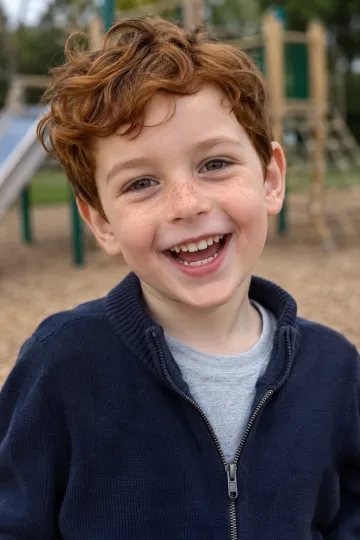
See a finished book
Theodore: The Teacher Who Found Another Way
A finished story. The child in it, Theodore, is AI-generated — not a real child. Your own book stays private and is never published.
Illustrated (Picture style) · Low (Illustration strength) · Luminous drawing (Illustration look)
Pages from the story
Pages from the story
Illustrations from this story. Your book is drawn with your own child as the hero, in this story's colours.
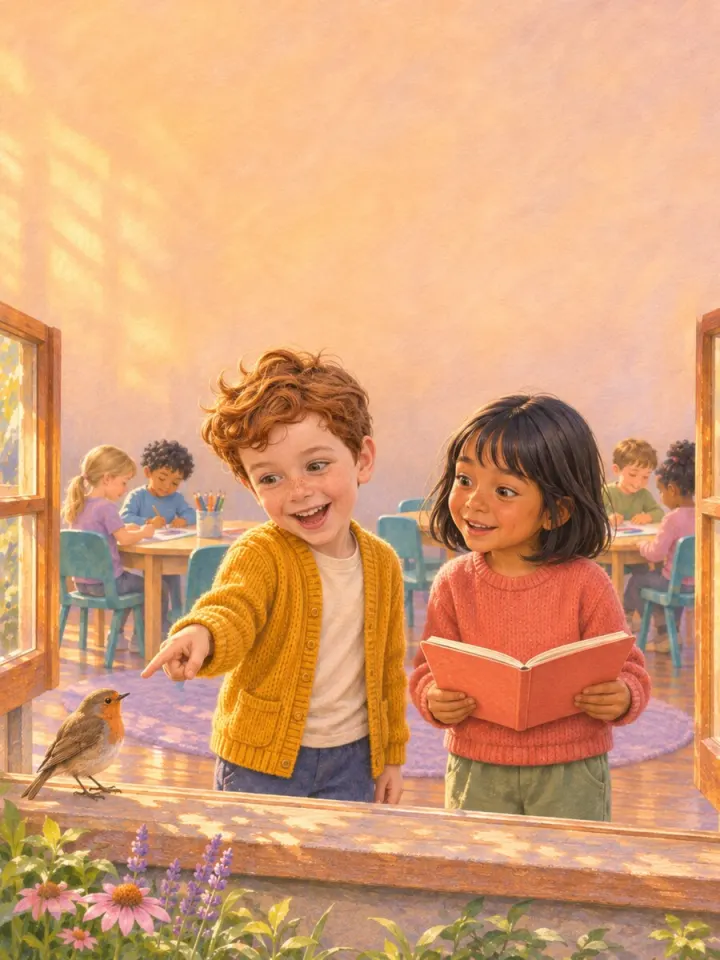
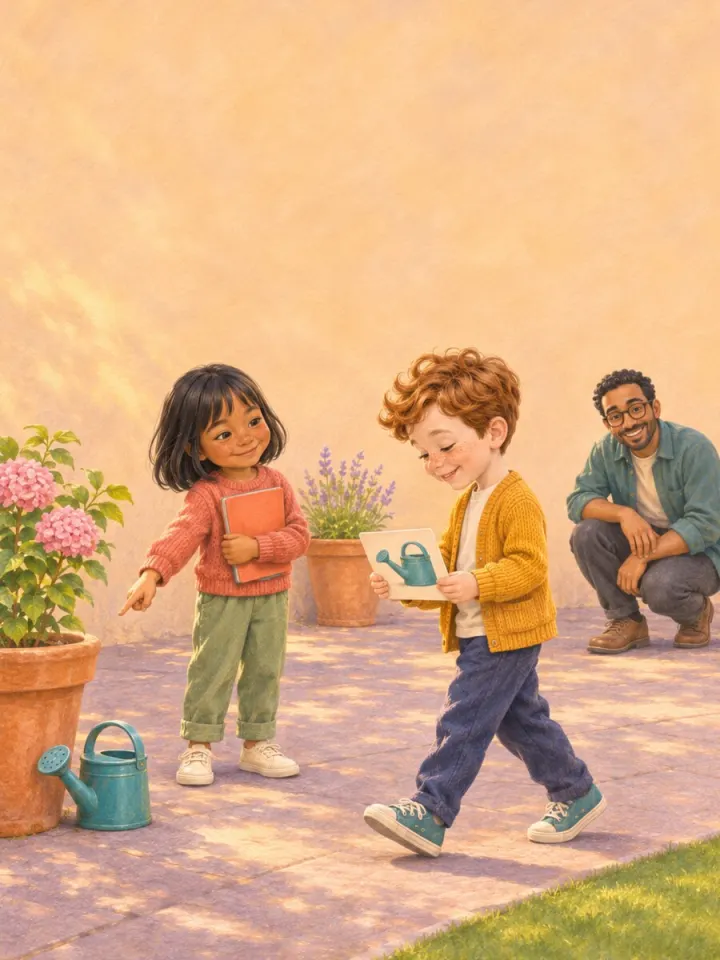
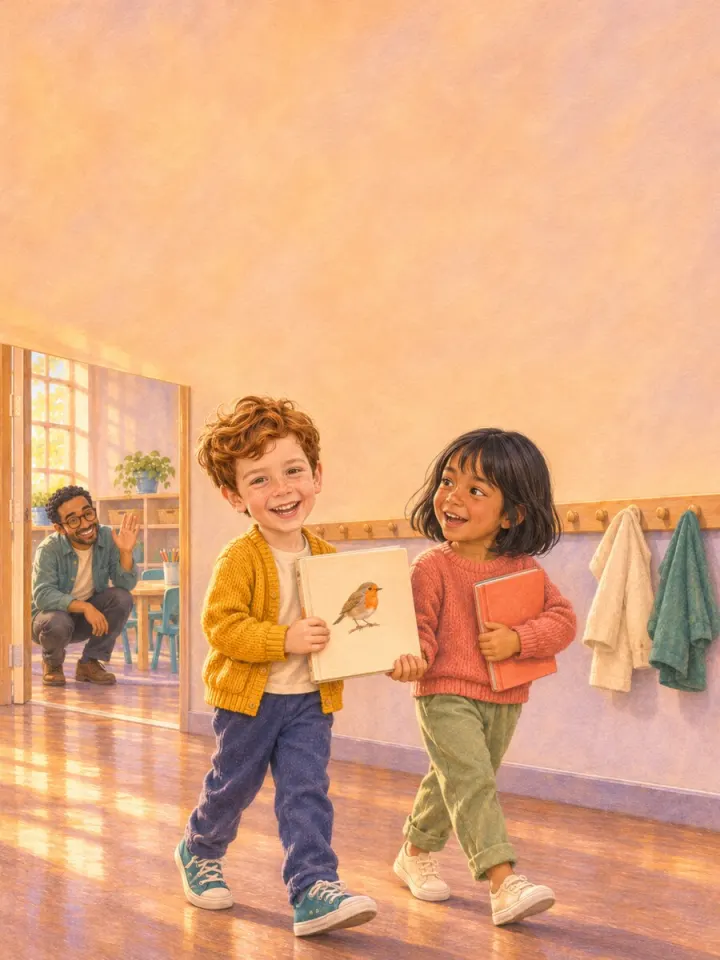
The Teacher Who Found Another Way: the full story
Robin had saved the chair beside the art table. It was the best chair, near the blue pencils and the window where birds sometimes landed. Today a new child was joining their class. Robin wanted to help so much that a whole speech was already waiting behind their teeth.
Their teacher, Mr Ash, introduced Mina. She carried a coral sketchbook with a bent corner. “Mina knows another language,” he explained. “She is beginning to learn ours. We can help her find her way, and learn from her too.” Mina looked around the room, then gave the class a small wave.
Robin waved back. “Come here, you can sit beside me, and then we can draw something before we put everything away for snack!” Mina looked at the chair, the pencils and Robin. She didn't move. Robin tried again, louder. The same long sentence filled more of the room. Mina pulled her sketchbook closer.
Robin's cheeks grew hot. That had made things worse. “Sorry,” Robin said, lowering their voice. They sat down. Perhaps Mina wanted to draw. Perhaps she didn't. How could Robin ask without pouring out another river of words? On the scrap basket lay a piece of paper. Robin picked it up.
A circle, a pointed beak, two stick legs: a bird appeared. Robin set the picture on the low table, knelt beside it and held out a blue pencil. “Bird,” they said softly. Then they waited. Mina looked from the pencil to the picture. Her eyebrows lifted. She opened her sketchbook.
Her bird had a bright orange breast, a little round body and fine strokes that looked like feathers. Robin forgot to worry. “You can draw!” Mina pointed to the bird and said a word from her own language. Robin tried it. Mina said it again, gently, and Robin listened more closely. Now both children were learning.
Over the next few days they made a picture book together. Mina drew a cup. Robin drew a coat with enormous pockets. They chose things they actually needed: water, a pencil, somewhere to hang a coat. Mr Ash wrote a clear word beside each picture. Mina's family helped add words from home. Their little dictionary had room for both languages.
Robin sometimes wanted to turn every page at once. Instead, they practised offering one useful phrase. “Blue pencil, please.” They showed the pencil as they spoke. When Mina pointed to it, Robin knew the meaning had reached her. A nod alone had not always told them that. Mr Ash helped them leave time for an answer.
One morning, an orange-breasted bird landed outside the window. Robin pointed gently. Mina hurried over with her sketchbook. For a while they watched without saying anything. The bird tilted its head. Both children tilted theirs. Then Mina began drawing, and Robin noticed the tiny claws they had always forgotten to put on birds.
Mina invented their next game. She laid out pictures of a cup, a coat and a bird. Robin flapped bent arms like wings. Mina tapped the bird card. Then she stood up and pretended to pull on a coat. “Coat!” Robin guessed. They changed turns, adding a word when they could and pointing when they couldn't.
Mr Ash watched them swap places. “You noticed that the first way wasn't helping,” he told Robin. “Good teachers try different ways and watch what helps.” Robin glanced at Mina, who was pretending to sip from an invisible cup. “She made this game,” Robin said. “Then she's taught us something useful too,” said Mr Ash.
At circle time they made a short song: “Bird in the tree, flap with me.” Robin kept a gentle clap. Mina listened at first. Nobody hurried her. The next time, she joined the movement; later she added a word. Soon she suggested a slower clap, and Robin followed her rhythm. There were several ways to belong in the song.
In the courtyard, Mina made a picture trail to a watering can. Robin followed the drawings, then made a trail back to a flowerpot. When a picture puzzled Mina, she pointed and Robin changed it. The game worked better when both children could change the clues. Their dictionary grew, but so did their collection of ordinary, happy afternoons.
Several weeks later, the class prepared a show of things they had made. Mina chose her robin drawing. She also wanted to try reading one short sentence. Mr Ash wrote it on a card: “This is my bird.” Together they matched the spoken words to the writing. Robin sat nearby, ready to listen.
At rehearsal Mina paused after the first words. Robin nearly said the rest. Their mouth opened, then closed. Mina was still looking at the card. She needed a moment, not someone else's ending. Robin held still. Mina followed the next word with her finger and finished. She decided to keep the card for the show.
On show day Robin sat in the front row, hands around one knee. Mina stood beside her robin. Mr Ash waited nearby. “This is...” Mina began. A pause. Robin felt the answer pushing at their teeth again, and let it stay there. Mina looked down, breathed and read, “my bird.” Then she smiled.
The class clapped. Mr Ash praised Mina's careful drawing and the sentence she had chosen to share. Then he thanked Robin. “You listened, changed your approach and gave your friend time.” Robin felt warm all the way to their toes. Mina held up her sketchbook. “Draw?” she asked. Robin nodded. Two friends, two pencils, and plenty left to learn.
Parts for your family
Add these people to the book and they play these parts, with their own faces. Anyone else you add joins the story as themselves, beside the hero.
- The Classroom Teacher — suits: Mother, Father, Grandmother, Grandfather, Aunt, Uncle, Someone else
- The New Classmate — suits: Brother or sister, Cousin, Friend