Key takeaways
- Stop hurtful exclusion without labelling the child.
- Offer meaningful roles and ask the child who wants to join for their ideas.
- Distinguish wanting space from repeatedly targeting a peer.
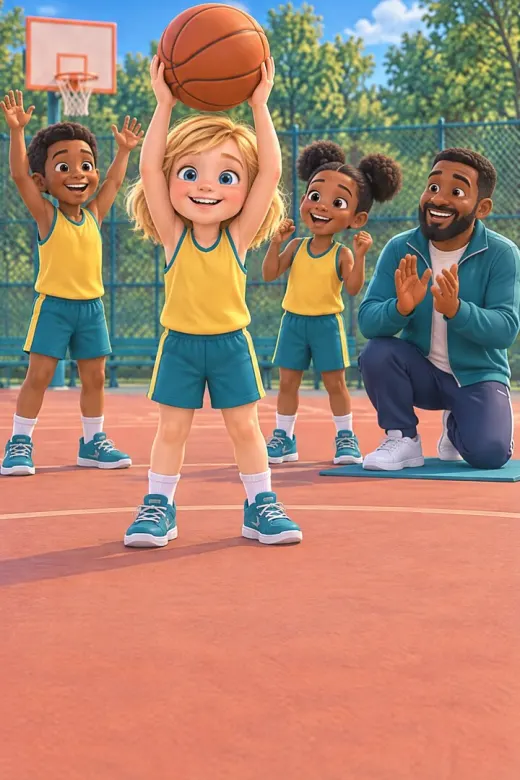
Two children are playing shops at the park. A third child approaches, and yours blocks the entrance with an arm: “You can’t play.” You see the other child’s face. How do you respond without publicly shaming your own child or brushing the behaviour aside?
Stop the hurtful exclusion, then help the children find specific words for joining play, asking for time alone and setting boundaries. Treating another child respectfully does not require being their close friend at every moment.
The difference between wanting space and excluding someone
A wish to play alone does not always mean a child is trying to hurt someone. They may want to finish something, recover from noise or move away from unsafe behaviour. Look at what is actually happening: are children taking turns, is the activity genuinely full, or is the same child repeatedly pushed away with humiliating words?
Threatening friendship to control a group and repeatedly keeping particular children out can be forms of relational aggression that need attention.[1] Discuss the behaviour without giving your child an identity such as “You’re a bad friend.”
This article focuses on a child who is leaving others out. If your child is being targeted or teased, our article about building a safety plan with adult support addresses that different situation.
Try a short intervention before a long lecture
Go over and describe the behaviour: “You blocked the entrance and said they couldn’t play. I won’t let you use hurtful words.” Then ask about the actual game: “What roles do you need at the moment?”
Giving the new child a job that consists only of watching or clearing up may not offer meaningful participation. Think together about genuine choices: “Would you like to be a customer, or design another part of the shop?” Ask the child who wants to join for their ideas too; they do not have to accept an invitation.
If your child really wants time alone, help them say it without putting someone down: “I’d like to finish this picture on my own. We could talk afterwards.” The teacher’s arrangements also matter in shared classroom spaces. A respectful-sounding boundary should not become a way to monopolise a communal area.
A question raised by a classroom rule
Teacher Vivian Paley explored exclusion in her classroom in the 1992 book You Can’t Say You Can’t Play. Later educational discussion highlighted that an “everyone can play” rule alone may not be enough.[1]
For parents, this raises a practical question: when we ask children to include someone, do we show them how? “Be kind” is different from working out how another role could fit into a game. This does not mean every child must play with every other child at all times.
Practise inviting someone into a pretend game
Set up a small scene with toys: two figures are building an island, while a third waits on the shore. Let your child direct first. Ask, “How could this figure join in?” Then swap roles and try two invitations of your own:
- “Would you like to draw the island’s road or its harbour?”
- “We’re building a spaceship. Is there something you’d like to add?”
The point is not to catch your child giving a wrong answer. You can also practise what happens when someone says no: “All right. There’s space if you change your mind.” Listening, turn-taking and cooperation are friendship skills children develop through practice.[2]
What to discuss with the teacher if it keeps happening
Describe what keeps happening rather than asking only “Why is my child like this?” For example: “At three playdates, they kept the same child out. Are there activities where you’ve seen them work together?” Discuss accessible activities, small groups and any communication support the children need.
Teasing, threats, repeated targeting or exclusion based on a child’s identity should not be dismissed as a simple play preference. Adults need to set clear boundaries and follow up. Repair should also mean more than a forced apology: identify what will change in the next interaction.
Talk about a hero who notices
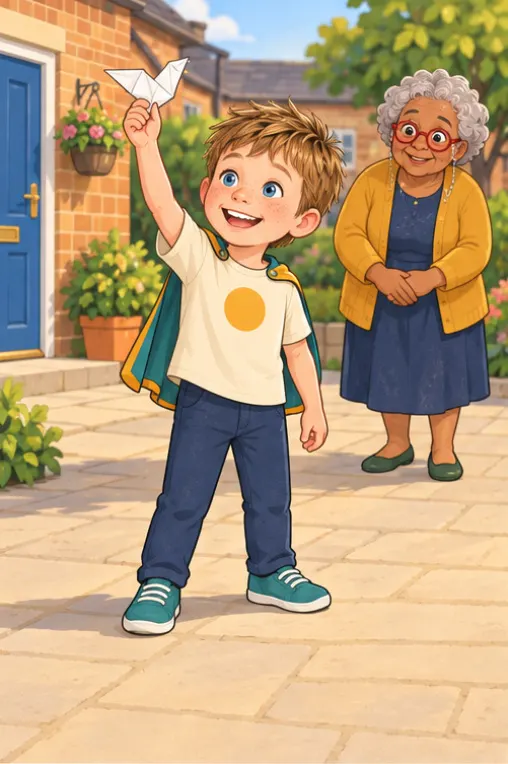
Our hero notices a child standing alone beside the chalk river. He invites the child to join in and waits for an answer. Theo suggests building a bridge.
You could ask, “How did the game change when the hero made room?” Avoid using the story to put your child on trial. Thinking up a new role together is a more concrete activity to take from the scene.
The Superhero Who Noticed
A homemade cape, a quiet mew and a power hiding in plain sight
A story about noticing someone, asking what they would like to contribute and waiting for their answer.
Make this book with your child →Sources and editorial note
The sources below informed the discussion of inclusive play and friendship skills. The toy scene and sample invitations are editorial activities, not evidence of an intervention’s effectiveness.
- NAEYC / Young Children: Preventing and Responding to Relational Aggression in Preschool Classrooms
- Raising Children Network: Preschooler friendships
Sources checked: 17 November 2026. Written by the I Am In The Story editorial team.
Frequently asked questions
Must they always play with everyone?
No. Respectful boundaries and time alone can be appropriate. Monopolising shared spaces or humiliating the same child needs separate attention.
Is “Let everyone play” enough?
It can help to work out a concrete role or invitation together. Add usable words and adult support to the rule.
What if it keeps happening?
Bring specific examples to the teacher. Repeated targeting, threats or identity-based exclusion should not be dismissed as a simple play preference.
Language:Türkçe Deutsch Français Español Italiano Nederlands Svenska Dansk Norsk