Key takeaways
- Listen and explain that being mistreated is not their fault.
- Identify safe adults without making a comeback compulsory.
- Agree concrete action and a follow-up time with school.
“They called me that again today.” Your child may say it while taking off their shoes, as though it barely matters. You feel hurt, angry and ready to find an answer immediately. “Why didn’t you say something back?” is already forming in your mind.
If your child is being teased, start by listening and making a safety plan with the adults involved, before coaching a clever comeback. They are not to blame for being mistreated, even if they could not speak up.
One hurtful comment still deserves attention
Not every disagreement between children is bullying. A power imbalance, together with repetition or the potential for repetition, matters in identifying bullying.[1] You do not need to wait for a fifth incident before taking a concern seriously.
“We were only joking” does not make your child’s hurt disappear. Useful questions include “What exactly was said?”, “Where did it happen?”, “Who was there?” and “Do you feel safe at school now?” Avoid firing them off as an interrogation. Give your child room to tell the story first.
Three things to say in the first conversation
- “I’m glad you told me.” Recognise the step they have taken in speaking.
- “It isn’t your fault that someone treated you like that.” Do not add blame or shame.
- “You don’t have to sort this out on your own.” Make it clear that adults will help keep them safe.
Their experience may bring back a memory from your own childhood. That is understandable, but try not to turn the first conversation into a long story about yourself. Before saying “What I would do…”, ask, “Is there anything you’re worried I might do?” They may fear that telling a teacher will make things worse.
A short response and somewhere safe to go
If your child wants to, practise two simple sentences at a calm time: “I don’t want you to speak to me like that” and “I’m going to my teacher.” Their voice does not have to be loud or polished. If speaking feels unsafe, they can move away and seek help without giving a response.
Try sketching a basic school map together. Mark the adults they can approach in the classroom, playground and on the journey to school. If the first person is unavailable, who else can help? This is an editorial planning idea, not a way of making your child responsible for managing school safety.
Do not tell them to hit back, threaten someone or demonstrate their strength. Simply telling them to ignore it is not a sufficient plan either.[2] If there is a physical threat or ongoing danger, get them somewhere safe and seek help from the relevant adults promptly.
A specific message to send the teacher
Use the school’s appropriate communication channel rather than posting in anger to a class group. You could adapt this example with the details you know:
“My child told me that comments about their appearance were repeated in the playground on Tuesday. I’ve noted the words they reported and who they said was present. What steps can we take to keep them safe? I’d like to agree who they can approach at breaktime and when we will review the plan.”
Distinguish what your child reported from something you witnessed yourself. Dates, places and words are useful; labels about children’s personalities are less so. Agree a time to follow up. Being made to confront the other child or reconcile immediately should not be treated as the solution.
Make “Was today better?” more specific
Follow-up is about more than whether the comment happened again. Ask, “Who were you able to go to at breaktime?” or “Was there a part of our plan that didn’t work?” Supporting your child should not require them to repeat their experience in front of their peers.
Persistent fear, marked withdrawal, difficulty attending school or significant changes in daily life are reasons to seek school support and advice from a professional who works with children. Having already told an adult does not mean your child cannot ask for help again.
Why strength in the karate story is not a kick
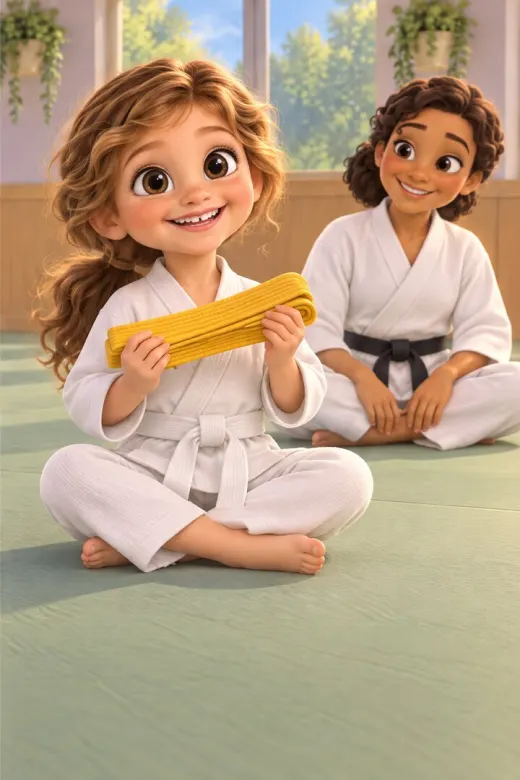
In The Karate Star with Quiet Strength, our hero is teased about their white belt and asked to show a karate move. They notice their anger, loosen their hands, state a boundary and go to their teacher. The teacher listens and takes responsibility for addressing what happened.
Instead of asking whether the hero could have delivered a stronger kick, ask, “What did the adult do when the hero asked for help?” Anger is allowed in this story; fighting is not presented as a solution. A book cannot replace action on bullying, but it can offer a scene for talking about seeking support.
The Karate Star with Quiet Strength
A bow, a brave choice, and a belt earned with control
A hero who chooses a trusted adult rather than trying to prove their strength in response to teasing.
Make this book with your child →Sources and editorial note
Definitions and adult-support guidance were checked against the sources below. The map, message and dialogue are examples created for this article. Check your school’s reporting and safety arrangements too.
Sources checked: 17 November 2026. Written by the I Am In The Story editorial team.
Frequently asked questions
Is all teasing bullying?
Bullying involves a power imbalance and repetition or the potential for repetition. A single hurtful incident can still deserve attention.
Should I tell them to hit back?
No. Plan safe ways to move away and get adult help. Do not make your child responsible for resolving a dangerous encounter alone.
What should I tell the teacher?
Share the date, place and reported words, distinguishing them from what you witnessed. Ask about safety steps, an adult contact and a review time.
Language:Türkçe Deutsch Français Español Italiano Nederlands Svenska Dansk Norsk