Key takeaways
- Listen to what they thought would happen if they said no.
- Practise a short boundary, an alternative and asking for help.
- Never make safety depend on your child producing a firmer voice.
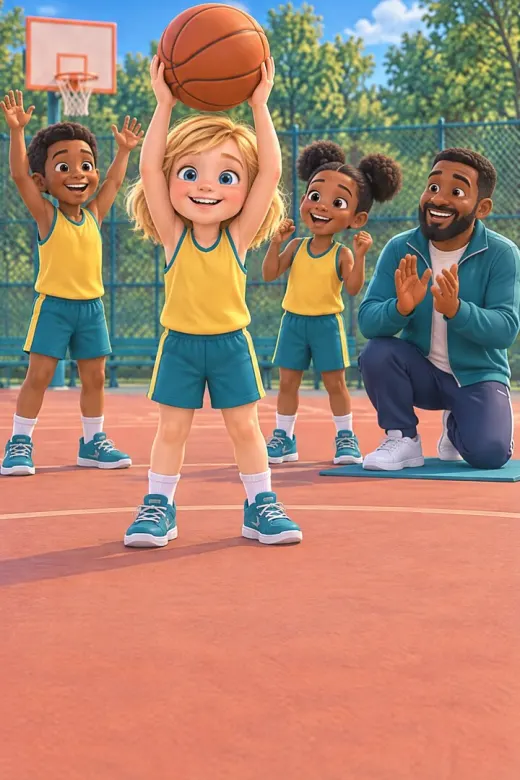
A friend changes the game, takes the last piece and says, “I won’t play with you if you don’t do this.” Your child agrees, then tells you afterwards that they did not want to. “You should have said no” is easy to say. It can be harder for a child who fears losing a friend.
Learning to say no may take more than one perfect sentence: your child can practise with small choices, short words and an adult ready to help. The aim is to express a preference or boundary and seek support, rather than oppose everyone all the time.
Listen to what was behind the yes
Instead of “Why did you let them?”, ask, “What did you think would happen if you said no?” They may have feared being left out, wanted the argument to end or simply not known what to say. Peer pressure can come through explicit words or less obvious group expectations.[1]
Do not assume you know how the moment felt. Rather than supplying the answer with “You didn’t want to, did you?”, start with “What did you want at the time?” A child can also change their mind afterwards, and you can talk about that too.
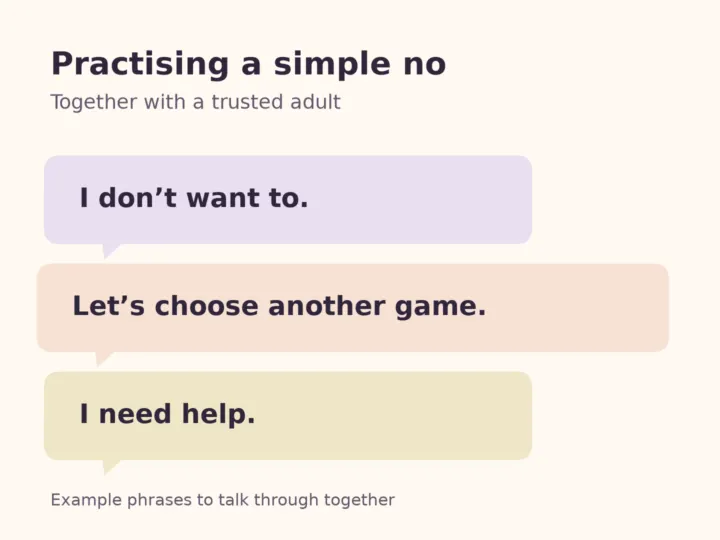
Choose short phrases for three situations
Pick words that suit your child’s age and everyday language. This table is a conversation rehearsal, rather than a safety protocol for every situation.
| Situation | Words to try | Another option |
|---|---|---|
| They have a different preference | “I don’t want to.” | Suggest another game if they wish. |
| The pressure continues | “My answer is no.” | Move away without extending the argument. |
| They feel afraid or pressured | “I need help.” | Go to a trusted adult. |
They may explain if they want to, but do not have to keep defending their answer until the other person agrees. If words will not come, approaching you or using an agreed signal can be a way to ask for help. A picture or another communication tool may suit your child better than speech.
Do not let practice become more pressure
At home, use a toy to make an invitation: “I’d like to play this. Would you?” Let your child say no, then respond, “All right, we can think of something else.” The first rehearsal does not need an exaggerated angry-friend role.
Swap parts. Your child can offer an activity and hear your calm “I don’t want to right now.” Then ask, “How did it feel to hear no?” Accepting another person’s boundary is part of the same skill as expressing their own.
You do not have to recreate a real incident. If your child does not want to rehearse, stop. Even a small game should not become another test over which they have no control.
Make room for a no at home too
If they do not want to hug a visitor, offer another way to say hello. Child-safety guidance also emphasises the right to refuse unwanted touch and tell a trusted adult about a worry.[2]
Everyday care and safety remain adult responsibilities. You can still acknowledge discomfort: “We need the seat belt in the car. Let’s check where it’s uncomfortable.” Distinguish real choices from requirements without pretending that everything is optional. Asking “Would you like to?” and punishing a no does not offer a genuine choice.
Friendship threats need adult support
If “I won’t be your friend unless…” keeps happening, share when and where it occurs with the teacher. Agree on supervision and communication where needed. Instead of insisting your child immediately abandon a friend, discuss safety, their experience and the help available.
When there are threats, harm or safety concerns, do more than teach a firmer no. Put adult support in place first. Not managing to say no, freezing or disclosing an incident later never makes a child responsible for being harmed.
One phrase and one person for tonight
Choose two things together today: one boundary phrase your child could actually use and an adult they can approach when things are difficult. Put “I don’t want to” alongside “I can ask my teacher for help.”
If a book you read together has a moment where a character’s choice is heard, ask, “What do you think they want now?” Wait for your child’s idea before offering your own. It is another ordinary opportunity to listen to what someone wants.
Sources and editorial note
The sources below were consulted on peer pressure and personal boundaries. The first also addresses older children and teenagers; our everyday play examples are editorial adaptations for talking with younger children. Rehearsal cannot replace needed safeguarding support.
Sources checked: 17 November 2026. Written by the I Am In The Story editorial team.
Frequently asked questions
Do they need a long explanation?
No. They may explain if they wish, but do not have to keep defending a boundary until someone agrees.
How can they ask for help when words will not come?
Approaching you, using an agreed signal or another suitable communication tool may help. Choose an accessible option together.
Are they responsible if they did not say no?
No. Freezing, being unable to speak or telling someone later never makes a child responsible for being harmed. Adults must support safety.
Language:Türkçe Deutsch Français Español Italiano Nederlands Svenska Dansk Norsk